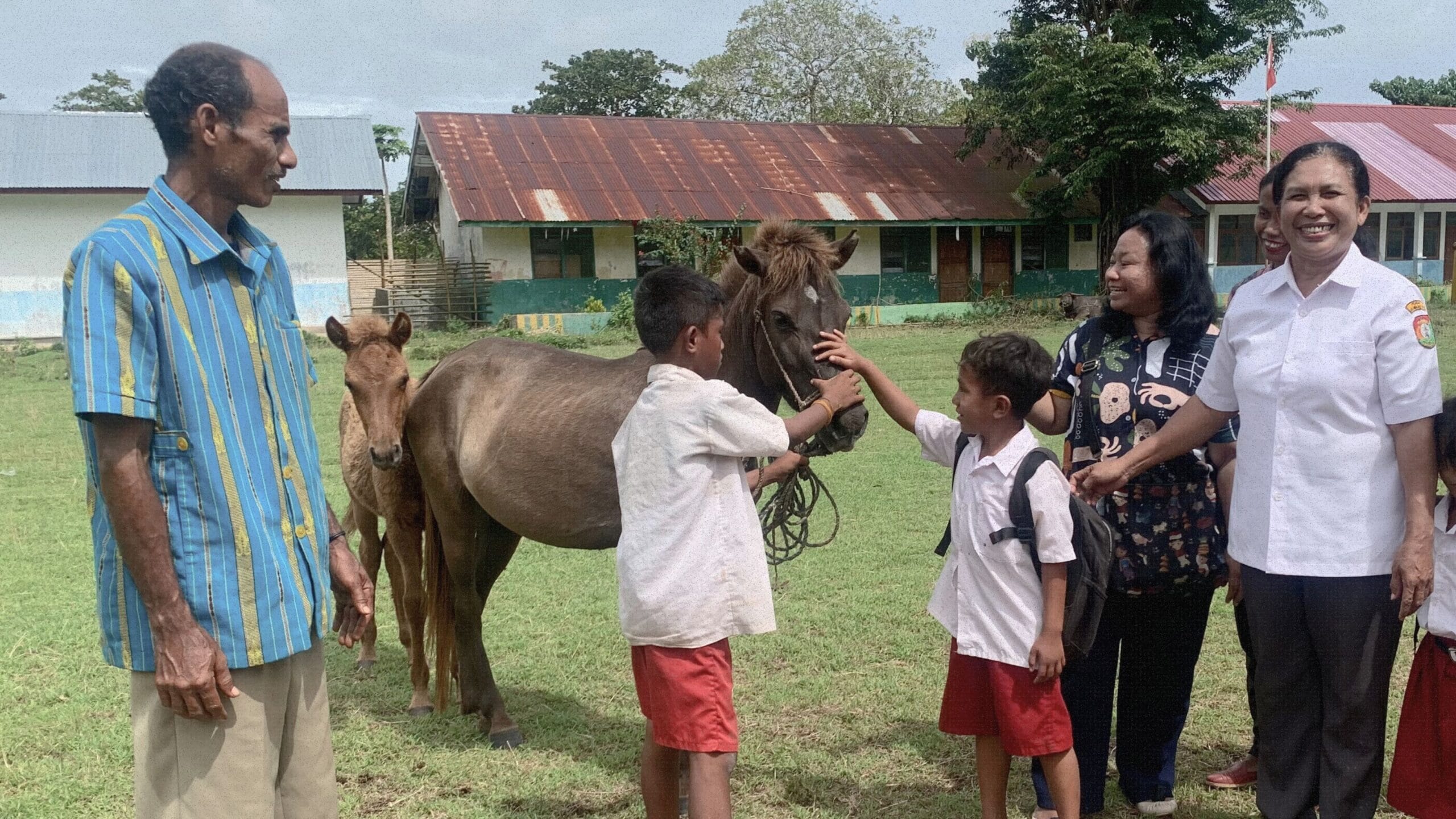
Impact Evaluation Study of the BERSAMA Program in Southwest Sumba Regency
“"Instructional Leadership Training and Community Development for Improving Elementary School Students' Literacy and Numeracy Skills"”
This study explores the impact of the BERSAMA program in improving basic literacy and numeracy competencies in lower grade elementary school students. Focusing on the district Southwest Sumba, East Nusa Tenggara, This study highlights the importance of approaches to enhancing principal leadership capacity and teacher teaching competency as strategic steps in supporting basic education. This research provides an important foundation for understanding how interventions such as the BERSAMA program can create positive change at the student, teacher, principal, community, and local government levels.
This report is part of an endline study conducted to map the program's impact at various levels and to understand the key factors driving its success or challenges. The study employed both quantitative and qualitative approaches, with descriptive and econometric analysis based on Difference-in-Differences (DID) to measure the program's impact, and thematic and narrative analysis to explore implementation experiences in the field. Data collection was conducted in 15 schools in the intervention sub-district (Kodi Bangedo) and 23 schools in the control sub-district (Kodi).
This report is part of a series of studies on “Improving Basic Literacy and Numeracy Competencies through the BERSAMA Program in Southwest Sumba,” which explores the potential for strengthening basic education in areas with limited access. For more complete information on the research findings and proposed policy recommendations, please visit the link below.